
1 / 2
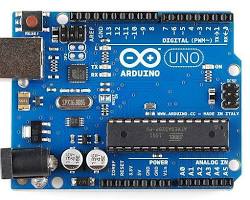
Arduino Uno R3 Microcontroller Board
340 EGP
Arduino- Development Boards- R3- Rev3- Uno
The Arduino Uno is an open-source microcontroller board based on the Microchip ATmega328P, widely used for electronics prototyping and automated projects.
Core Specifications
- Microcontroller: ATmega328P
- Operating Voltage: 5V
- Input Voltage (recommended): 7-12V
- Flash Memory: 32 KB (0.5 KB used by the bootloader)
- Clock Speed: 16 MHz
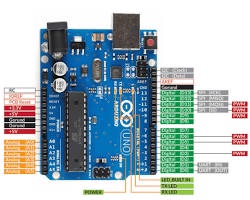
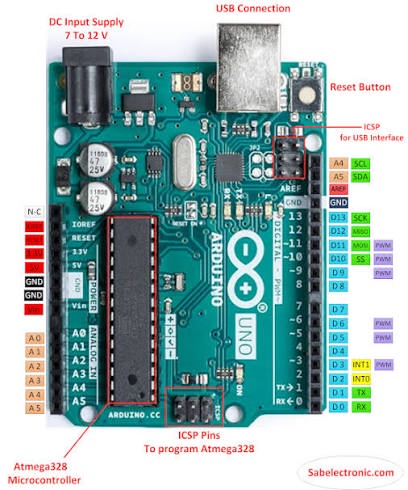
Pinout Overview
- Power Pins:
- Vin: Input voltage pin for connecting an external power source, such as a battery pack.
- 5V & 3.3V: Regulated power supply outputs used to power external sensors and modules.
- GND (Ground): Completes the electrical circuit (3 pins are available on the board).
- IOREF: Provides the voltage reference with which the microcontroller operates.
- Digital I/O Pins (0 to 13):
- Used for standard digital input (reading push buttons, motion sensors) and output (triggering relays, turning on LEDs).
- PWM Pins (~): Pins 3, 5, 6, 9, 10, and 11 support Pulse Width Modulation, allowing you to output varying voltage levels (e.g., dimming lights or controlling DC motor speed).
- Analog Input Pins (A0 to A5):
- Designed to read continuous varying voltage levels from analog components (such as photoresistors, potentiometers, or temperature sensors) and convert them into digital values between 0 and 1023.
- Communication Pins:
- RX (0) and TX (1): Used to receive (RX) and transmit (TX) TTL serial data.
- I2C (SDA/SCL): Located near the AREF pin (and historically mapped to A4 and A5), these are used for communicating with multiple devices over a two-wire interface.
- SPI (10-13): Pins 10 (SS), 11 (MOSI), 12 (MISO), and 13 (SCK) support Serial Peripheral Interface communication for high-speed data transfer. Pin 13 is also directly connected to the board's built-in testing LED.