ESP8266 NodeMcu WiFi Programming & Development Kit With CH340
160 EGP
ESP8266-NodeMcu-WiFi-Programming-Development-CH340-Modules
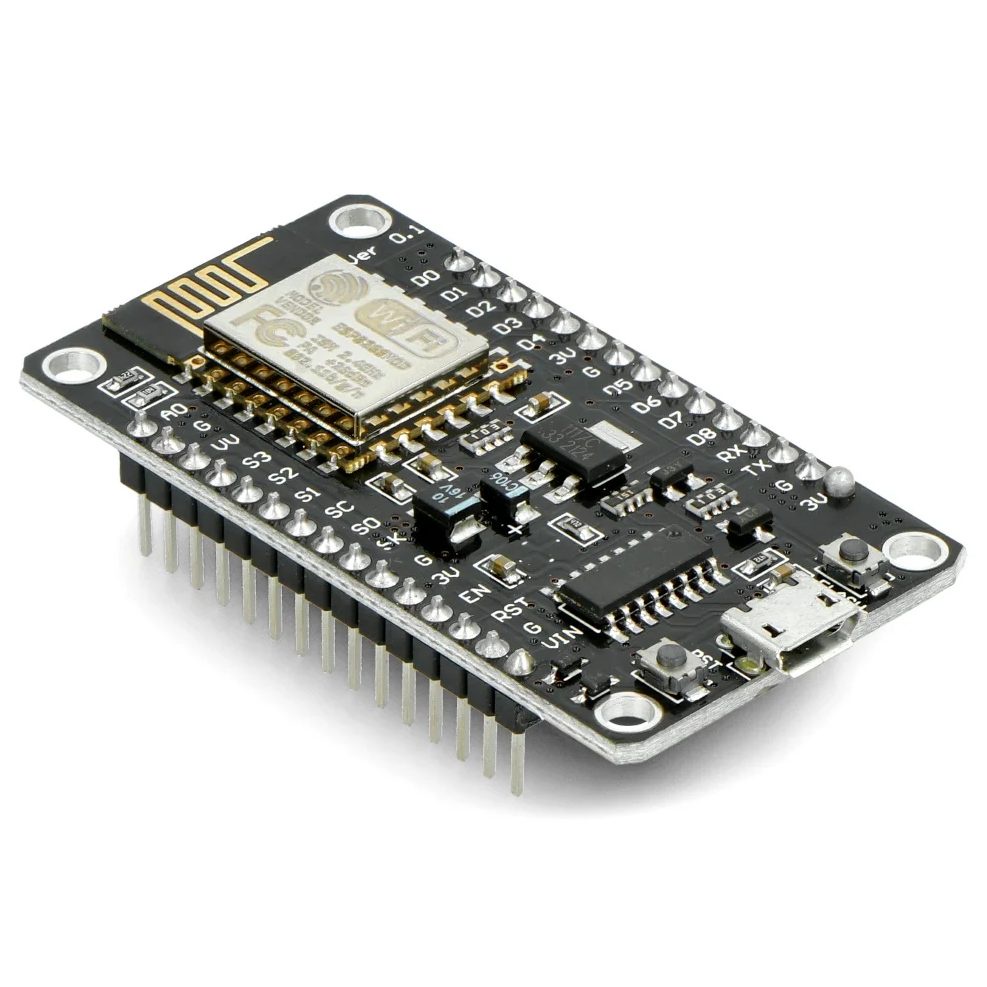
ESP8266 NodeMCU Wi-Fi Development Board with CH340
Jumpstart your Internet of Things (IoT) projects with the ESP8266 NodeMCU Wi-Fi Development Board. Combining a powerful microcontroller with built-in wireless capabilities, this open-source platform is the perfect foundation for building connected smart devices, wireless sensors, and home automation systems.
Key Features
- Integrated Wi-Fi Connectivity: Features the renowned ESP8266 (ESP-12E) module, allowing your projects to seamlessly connect to local Wi-Fi networks, access the internet, or act as a standalone Access Point (AP).
- Reliable CH340 Chip: Equipped with the CH340 USB-to-Serial converter, ensuring a smooth, stable, and driver-friendly connection to your computer for hassle-free code uploading.
- Versatile Programming: Highly flexible and open-source, it can be programmed using the familiar Arduino IDE, Lua scripting (NodeMCU firmware), or MicroPython, catering to developers of all skill levels.
- Breadboard-Friendly Design: The standard pin spacing allows the board to slot perfectly into standard breadboards, making hardware prototyping and wiring sensors incredibly easy.
- Rich I/O Interfaces: Despite its compact size, it packs a variety of GPIO pins supporting PWM, I2C, 1-Wire, and an Analog-to-Digital Converter (ADC) to interface with virtually any sensor or module.
Technical Specifications
⚙️ Core Components
- Microcontroller: ESP8266 (ESP-12E Module)
- USB-to-Serial Chip: CH340G
⚡ Power & Connectivity
- Operating Voltage: 3.3V (Can be powered with 5V via the Micro-USB port)
- Wireless Standard: 802.11 b/g/n (2.4GHz Wi-Fi)
- Digital I/O Pins: 11 pins (All except D0 support interrupt/PWM/I2C/1-wire)
- Analog Input Pins: 1 (ADC, 3.3V max input)
📦 Hardware Details
- Flash Memory: 4MB
- Connection Port: Micro-USB
Ideal For
- IoT & Smart Home Devices: Build custom smart plugs, Wi-Fi-controlled relays, or weather stations that send data directly to your smartphone.
- Wireless Sensor Networks: Read data from temperature, humidity, or motion sensors and upload it to cloud dashboards in real-time.
- Electronics Students & Hobbyists: An affordable, highly documented board that serves as the perfect entry point for learning wireless communication and coding.
A staple for any modern maker's toolkit. Power up your next smart invention with this reliable ESP8266 NodeMCU kit, available now at Wasla Electronics.